
Why Women Gain Weight? Understanding Body Changes, Lifestyle & Healthy Solutions
Why Women Gain Weight? Understanding Body Changes, Lifestyle & Healthy Solutions
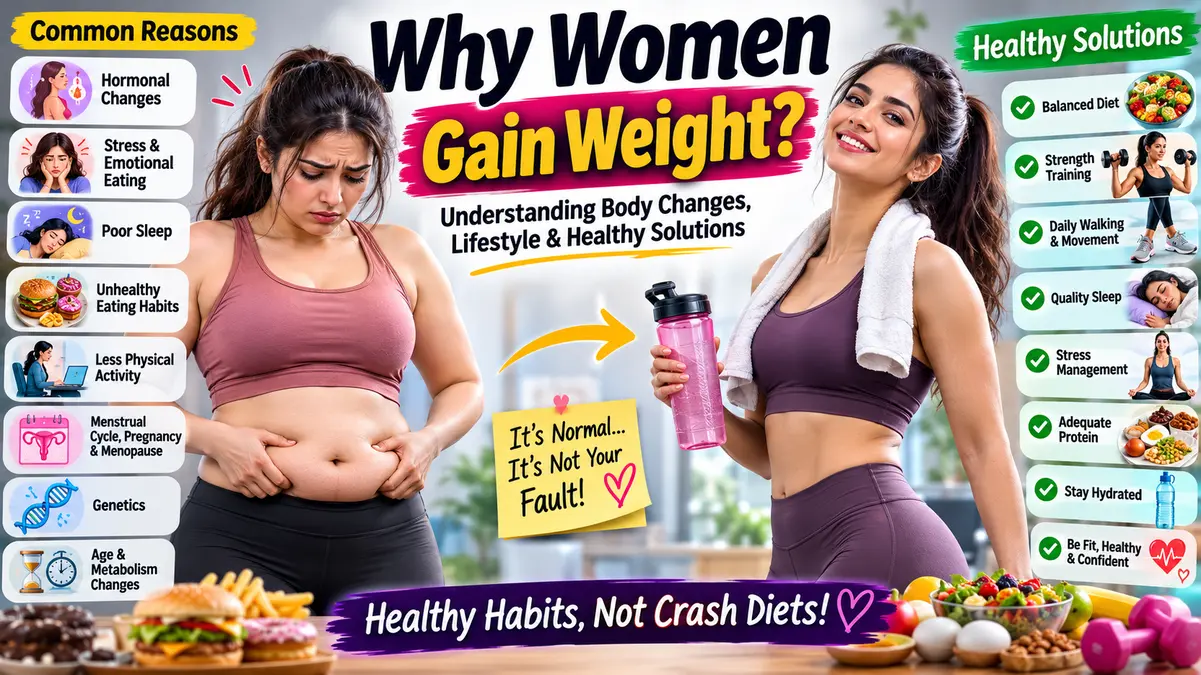
Women Gain Weight: Iska Main Reason Kya Ho Sakta Hai?
Jab women gain weight, to usually ek single reason responsible nahi hota. Body weight energy intake aur energy expenditure ke saath-saath water retention, muscle mass, digestive contents aur hormonal changes se bhi temporarily change ho sakta hai.
For example, ek woman ki eating habits same reh sakti hain, lekin agar daily walking kam ho gayi, muscle mass reduce hui aur sleep poor ho gayi, to total energy expenditure decrease ho sakta hai. Long term mein ye gradual weight increase contribute kar sakta hai.
Isi wajah se women gain weight ko samajhne ke liye overall lifestyle ko dekhna important hai, na ki sirf weighing scale ke number ko.
1. Age Ke Saath Metabolism Aur Muscle Mass Mein Changes
Age badhne ke saath body composition naturally change ho sakti hai. Agar resistance training aur adequate protein intake nahi hai, to muscle mass gradually decrease ho sakti hai. Muscle tissue body ko maintain karne ke liye energy use karta hai, isliye muscle loss ke saath daily energy requirements bhi change ho sakti hain.
Isi reason se women gain weight hone ka pattern 30s, 40s aur 50s mein different ho sakta hai. Yeh change sirf “metabolism kharab ho gaya” kehne se explain nahi hota; activity, muscle mass, food intake aur lifestyle sab important hain.
Regular resistance training, adequate protein, daily movement aur good sleep healthy body composition maintain karne mein help kar sakte hain.
2. Hormonal Changes Aur Different Life Stages
Women’s bodies mein reproductive life ke different stages par hormonal changes naturally occur hote hain. Menstrual cycle, pregnancy, postpartum period aur menopause ke around body composition aur fat distribution change ho sakti hai.
Menopause ke transition ke during estrogen levels mein changes ke saath fat distribution aur lean mass mein changes commonly observed hote hain. Isliye women gain weight hone ka experience menopause ke around kuch women mein noticeable ho sakta hai.
Iska matlab yeh nahi ki weight gain unavoidable hai. Lifestyle habits, strength training, nutritious food, adequate sleep aur regular activity body composition ko support kar sakte hain.
3. Physical Activity Kam Hona
Aaj ki busy lifestyle mein sitting time increase hona common hai. Office work, commuting, screen time aur household responsibilities ke beech daily movement kabhi-kabhi unknowingly reduce ho jata hai.
Agar women gain weight kar rahi hain aur unki daily activity significantly reduce ho gayi hai, to total calorie expenditure bhi decrease ho sakta hai. Agar food intake same rahe, to long-term energy surplus weight gain mein contribute kar sakta hai.
Is problem ka solution sirf intense cardio nahi hai. Walking, stairs use karna, household movement, short activity breaks aur regular workouts daily movement improve kar sakte hain.
👉🏻Weight Loss Yoga Poses: Fat Loss, Flexibility Aur Fitness Ke Liye 10 Best Yoga Poses
👉🏻Powerful Yoga Poses Hormones Balance Ke Liye Stress, PCOS Aur Wellness Guide
👉🏻Home Workout for Female: Healthy Lifestyle Guide
4. Stress Aur Emotional Eating
Long-term stress eating behaviour ko influence kar sakta hai. Stressful days mein kuch people high-calorie, highly palatable foods ki taraf zyada attract ho sakte hain. Emotional eating ka matlab weakness nahi hai; eating behaviour emotions, environment aur habits se influence ho sakta hai.
Jab women gain weight stress ke period ke baad notice karti hain, to self-blame karne ke bajay stress management ko lifestyle ka part banana helpful ho sakta hai.
Deep breathing, walking, hobbies, social connection, relaxation routines aur sufficient sleep stress management mein support kar sakte hain. Agar emotional eating frequently uncontrollable feel ho, qualified professional se guidance lena useful ho sakta hai.
5. Poor Sleep Aur Weight Management
Sleep body ke recovery, appetite regulation aur daily energy ke liye important hai. Consistently insufficient sleep hunger, food cravings, mood aur exercise motivation ko negatively influence kar sakti hai.
Agar women gain weight kar rahi hain aur unki sleep routine regularly poor hai, to sleep ko improve karna weight-management strategy ka important part ho sakta hai.
Most adults ko generally 7–9 hours sleep ki zarurat hoti hai, although individual requirements vary kar sakti hain. Consistent bedtime, comfortable sleeping environment aur bedtime se pehle excessive screen exposure reduce karna helpful habits ho sakte hain.
6. Diet Mein Small Changes Ka Long-Term Effect
Weight gain kabhi-kabhi ek large meal ki wajah se nahi hota. Small calorie surplus agar regularly repeat ho, to months ke period mein body weight gradually increase ho sakta hai.
Processed snacks, sugary drinks, frequent desserts, oversized portions aur mindless snacking total calorie intake ko increase kar sakte hain. Isliye jab women gain weight notice karein, to extreme diet start karne ke bajay daily eating pattern ko objectively observe karna better hai.
Protein-rich foods, vegetables, fruits, whole grains, legumes, nuts, seeds aur minimally processed foods ko balanced diet mein include karna satiety aur nutrition support kar sakta hai.
7. Protein Intake Kam Hona
Protein muscle maintenance aur recovery ke liye important nutrient hai. Agar diet mein protein consistently low hai aur resistance training bhi absent hai, to muscle mass maintain karna difficult ho sakta hai.
Isi context mein women gain weight hone ke saath body composition bhi change ho sakti hai. Scale par weight same ya slightly higher ho sakta hai, lekin muscle-to-fat ratio different ho sakta hai.
Protein sources mein eggs, dairy products, fish, lean meat, soy, beans, lentils, chickpeas aur other protein-rich foods include kiye ja sakte hain. Individual protein needs activity, age aur health factors par depend karti hain.
8. Strength Training Na Karna
Cardio health ke liye excellent hai, lekin resistance training bhi important hai. Strength training muscles ko resistance ke against work karne ka stimulus deti hai aur muscle strength aur lean mass ko support kar sakti hai.
Agar women gain weight ke saath muscle mass gradually decline ho rahi ho, to resistance training ko weekly routine mein include karna useful ho sakta hai.
Beginners bodyweight exercises, resistance bands, machines ya light dumbbells se start kar sakte hain. Technique aur gradual progression ko priority deni chahiye.
9. Pregnancy Aur Postpartum Changes
Pregnancy ke during body ko baby growth aur pregnancy-related changes ke liye additional energy aur nutrients ki zarurat hoti hai. Pregnancy ke baad bhi body immediately pre-pregnancy weight par return nahi karti, aur recovery individual hoti hai.
Isliye pregnancy ke baad women gain weight notice karna unusual nahi hai. Postpartum period mein crash dieting ke bajay adequate nutrition, recovery, sleep whenever possible aur gradual physical activity par focus karna important hai.
Postpartum exercise aur nutrition ke liye healthcare professional ki individual guidance particularly useful ho sakti hai.
10. Water Retention Aur Temporary Weight Fluctuations
Scale par har increase body fat ka increase nahi hota. Sodium intake, carbohydrate intake, menstrual cycle, digestion, hydration aur exercise ke baad inflammation temporary water-weight changes create kar sakte hain.
Isliye agar women gain weight ek ya do din mein suddenly notice karein, to immediately assume nahi karna chahiye ki body fat increase hua hai.
Daily weight ke bajay weekly trends ko observe karna more useful ho sakta hai. Same conditions mein weight measure karna comparison ko more consistent banata hai.
👉🏻Beans vs Lentils: Protein, Fiber, Weight Loss Aur Muscle Gain Ke Liye Kaunsa Better Hai?
👉🏻Abs Workout: Strong Core Aur Visible Abs Ke Liye Complete Workout Guide
👉🏻Seeds for Weight Loss: Weight Loss Ke Liye 7 Best Seeds Kaise Khayein?
11. Genetics Ka Role
Genetics body shape, appetite, fat distribution aur metabolic characteristics ko influence kar sakti hai. Do women exactly same diet aur workout follow karne ke baad bhi identical results experience nahi karengi.
Isliye women gain weight ko kisi doosri woman’s body se compare karna useful nahi hai. Individual baseline, lifestyle, genetics aur life stage different hote hain.
12. Medications Aur Health Conditions
Kuch medications aur certain health conditions body weight ya appetite ko influence kar sakte hain. Agar unexplained weight gain rapid ho, persistent ho, ya unusual symptoms ke saath ho, to healthcare professional se consultation important hai.
Women ko prescribed medication apne aap stop nahi karni chahiye. Agar women gain weight medication start ya change karne ke baad notice karein, to prescribing doctor se discussion karna appropriate hai.
Healthy Weight Management Kaise Start Karein?
Healthy weight management ka goal body ko punish karna nahi, balki sustainable habits develop karna hona chahiye. Agar women gain weight hone ke baad woh immediately extremely low-calorie diet start karti hain, to adherence aur nutrition dono affect ho sakte hain.
Instead, small practical changes se start karein:
- Daily meals mein adequate protein include karein.
- Vegetables aur fruits ka intake improve karein.
- Sugary drinks aur frequent ultra-processed snacks ko limit karein.
- Regular walking ya daily movement maintain karein.
- Week mein resistance training include karein.
- Sleep routine ko priority dein.
- Stress management ke liye realistic habits develop karein.
- Progress ko weeks aur months ke trend se evaluate karein.
Weight Loss Ke Liye Crash Diet Kyun Avoid Karein?
Jab women gain weight hota hai, to fast weight loss ka pressure naturally feel ho sakta hai. Lekin extremely restrictive diets sustainable nahi hoti aur adequate nutrients, energy aur protein provide karna difficult ho sakta hai.
Healthy approach generally gradual changes, balanced nutrition aur regular physical activity par focus karti hai. Aapka goal sirf scale ka number reduce karna nahi, balki strength, fitness, energy aur healthy body composition improve karna hona chahiye.
Cardio Ya Strength Training: Kya Better Hai?
Cardio aur strength training dono useful hain, lekin unke benefits different hain. Cardio cardiovascular fitness aur calorie expenditure support karta hai, jabki resistance training muscle strength aur lean mass ko support karti hai.
Isliye women gain weight management ke liye dono ko appropriate combination mein use karna practical ho sakta hai. Walking, cycling, swimming ya other cardio activities ke saath 2–3 strength sessions weekly many adults ke liye useful framework ho sakta hai, provided it matches their fitness level.
Women Gain Weight Aur Body Positivity
Health aur appearance ko ek hi cheez samajhna zaroori nahi. A woman’s body life ke different stages mein naturally change hoti hai. Weight gain ko automatically failure, laziness ya lack of discipline label karna unfair hai.
Jab women gain weight, unhe shame feel karane ke bajay practical information aur supportive environment milna chahiye. Healthy habits confidence aur physical wellbeing improve karne ke liye honi chahiye, unrealistic beauty standards meet karne ke liye nahi.
👉🏻Vegan Diet Kya Hai? Benefits, Foods, Protein Aur Complete Guide
👉🏻Triphala Benefits: Digestion, Gut Health Aur Overall Wellness Ke Liye Complete Guide
👉🏻Supplements for Beginner: Gym Start Karne Walon Ke Liye Best Supplements, Uses Aur Safety Guide
Progress Ko Scale Ke Beyond Kaise Measure Karein?
Weight ek useful metric ho sakta hai, lekin complete health picture nahi deta. Agar women gain weight kar rahi hain lekin strength improve ho rahi hai, waist measurement stable hai, fitness better ho rahi hai aur clothes better fit ho rahe hain, to body composition changes bhi consider karne chahiye.
Progress track karne ke liye strength levels, workout consistency, waist measurement, energy levels aur overall fitness ko bhi observe kiya ja sakta hai.
When Should You Talk To A Doctor?
Har weight change medical problem nahi hota. Lekin unexplained, rapid ya persistent weight gain ko ignore nahi karna chahiye, especially agar fatigue, swelling, menstrual changes, breathing problems ya other unusual symptoms bhi present hon.
Agar women gain weight without an obvious lifestyle explanation, healthcare professional appropriate evaluation kar sakta hai. Medical causes ko identify karne ke liye individual history aur examination important hote hain.
Final Takeaway
women gain weight hona ek natural aur multifactorial process ho sakta hai. Age, muscle mass, physical activity, diet, sleep, stress, pregnancy, menopause, genetics, medications aur health conditions body weight ko influence kar sakte hain.
Sabse important lesson yeh hai ki weight gain ko shame ya self-blame ke lens se nahi dekhna chahiye. Sustainable nutrition, strength training, regular movement, quality sleep aur stress management healthy body composition ko support kar sakte hain.
Agar weight suddenly ya unexplained way mein change ho raha hai, to professional medical advice lena better hai. Aur agar goal healthy weight management hai, to crash diet ke bajay realistic habits ko long term maintain karna usually more practical approach hoti hai.
FAQs
1. Why do women gain weight with age?
Age ke saath muscle mass, physical activity, eating habits, sleep aur body composition mein changes ho sakte hain. In factors ke combination ki wajah se body weight gradually increase ho sakta hai.
2. Does menopause always cause weight gain?
Nahi. Menopause ke around hormonal aur body-composition changes ho sakte hain, lekin weight change individual lifestyle, genetics, activity aur other factors par depend karta hai.
3. Can stress contribute to weight gain?
Haan. Chronic stress sleep, appetite, food choices aur physical activity ko influence kar sakta hai, jo indirectly body weight ko affect kar sakta hai.
4. Can women lose weight without a crash diet?
Haan. Sustainable calorie control, balanced nutrition, regular activity, resistance training aur adequate recovery ke combination se gradual weight management possible ho sakta hai.
5. Is strength training good for women?
Bilkul. Strength training muscle strength, physical function aur lean mass ko support kar sakti hai. Women ko resistance training se avoid karne ki zarurat nahi hai.
6. Is every increase on the weighing scale body fat?
Nahi. Water retention, menstrual cycle, food volume, hydration, sodium aur other short-term factors ki wajah se body weight temporarily fluctuate kar sakta hai.
7. Does eating less always lead to better weight loss?
Extreme restriction sustainable nahi hoti aur nutrition inadequate ho sakta hai. Balanced diet aur realistic calorie deficit, when appropriate, generally more practical approach hoti hai.
8. When should unexplained weight gain be checked by a doctor?
Agar weight gain rapid, unexplained ya persistent hai, ya unusual symptoms ke saath ho, to healthcare professional se evaluation karwana appropriate hai.
9. Can poor sleep affect weight management?
Haan. Poor sleep appetite, cravings, mood, recovery aur exercise motivation ko influence kar sakti hai, jo weight-management efforts ko affect kar sakta hai.
10. Does weight define a woman’s health or beauty?
Nahi. Body weight health ka sirf ek metric hai aur beauty ya personal worth ko define nahi karta. Healthy habits, strength, fitness aur overall wellbeing ko priority deni chahiye.
Disclaimer
This article is intended for general educational and fitness information only. It is not a substitute for personalized medical, nutritional, or professional healthcare advice. Weight changes can have many causes, and individual circumstances are different. If you experience rapid or unexplained weight gain, persistent symptoms, or concerns related to pregnancy, menopause, medications, or any medical condition, consult a qualified healthcare professional. Do not stop or change prescribed medication without medical guidance.






3 Comments