Metabolism is Slowing Down: Signs, Reasons Aur Metabolism Ko Support Karne Ke Practical Ways
Metabolism Slowing Down: Signs, Reasons Aur Metabolism Ko Support Karne Ke Practical Ways
Metabolism is slowing down ke common signs, reasons aur causes samjhein. Weight loss, muscle gain, diet, exercise, sleep aur healthy metabolism ko support karne ke practical tips jaaniye.
Agar aapko lag raha hai ki pehle ki tarah khane ke baad bhi weight easily increase ho raha hai, energy low rehti hai ya fat loss difficult ho gaya hai, to aap soch sakte hain ki aapka metabolism slow ho raha hai. Lekin metabolism is slowing down ko sirf age ya ek single factor se explain karna accurate nahi hai.
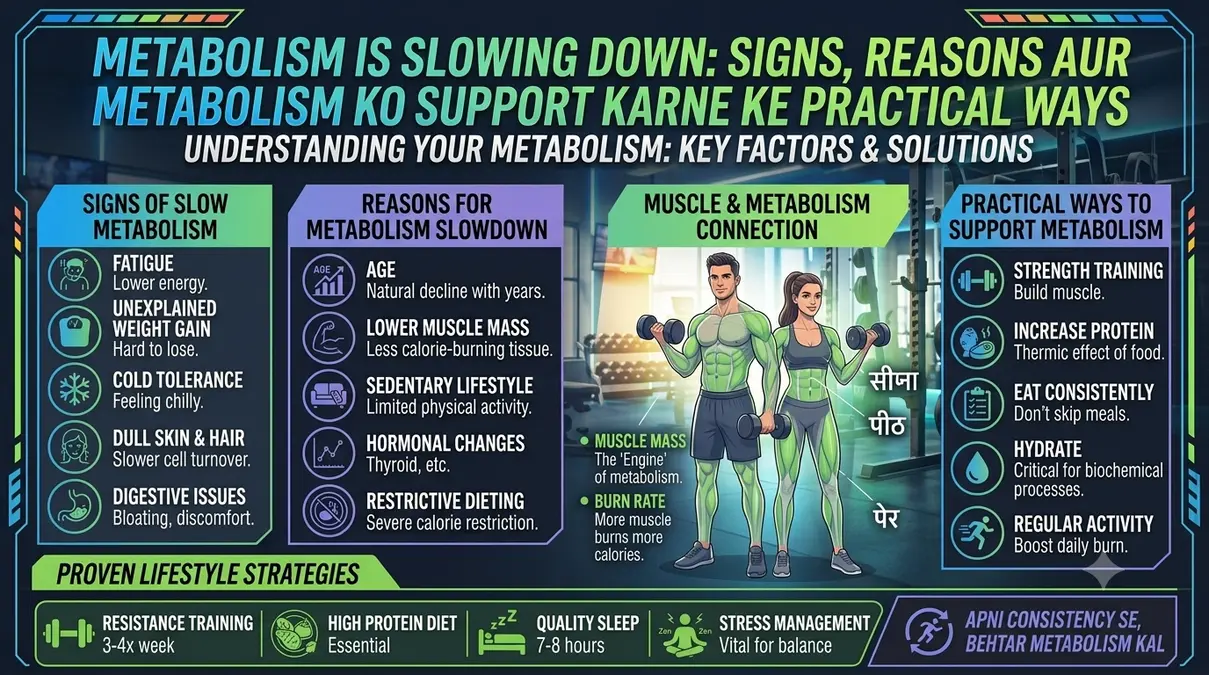
Metabolism ek complex process hai jisme body food ko energy mein convert karti hai aur resting state mein bhi calories use karti hai. Age, muscle mass, physical activity, sleep, diet, body weight aur hormonal health jaise multiple factors metabolic rate ko influence kar sakte hain.
Is article mein hum metabolism is slowing down ke common reasons, possible signs aur lifestyle habits ke baare mein detail mein samjhenge jo healthy metabolism ko support kar sakti hain.
Metabolism Kya Hai?
Metabolism un chemical processes ka collective term hai jinke through body energy produce aur use karti hai. Aapka body sirf exercise ke time calories burn nahi karta. Breathing, blood circulation, body temperature maintain karna, digestion aur cellular functions ke liye bhi energy required hoti hai.
Resting energy expenditure ko commonly resting metabolic rate ya basal metabolic rate se relate kiya jata hai. Iske alawa physical activity aur food ko digest karne mein bhi energy expenditure hota hai.
Isi wajah se metabolism is slowing down ko samajhne ke liye total daily energy expenditure ko consider karna important hai.
👉🏻Full Back Workout for Fat Loss: Complete Training Guide for a Stronger Back
👉🏻Seeds for Weight Loss: Weight Loss Ke Liye 7 Best Seeds Kaise Khayein?
👉🏻Muscle Recovery Fast Kaise Karein? 7 Natural Tarike Jo Really Kaam Aa Sakte Hain
Metabolism Slowing Down Ka Kya Meaning Hai?
Metabolism is slowing down ka simple meaning hai ki body ka energy expenditure kisi previous period ke comparison mein lower ho gaya hai. Lekin har person mein iska reason different ho sakta hai.
For example, agar kisi person ka body weight significantly reduce hota hai, to smaller body ko maintain karne ke liye body naturally fewer calories use kar sakti hai. Iske saath physical activity mein unconscious changes bhi ho sakte hain.
Isliye weight-loss plateau ka matlab automatically ye nahi hota ki metabolism permanently damaged ya slow ho gaya hai.
Metabolism Slowing Down Ke Common Reasons
1. Age Aur Muscle Mass
Age ke saath body composition aur physical activity mein changes aa sakte hain. Agar muscle mass gradually decrease hoti hai aur activity kam ho jati hai, to total daily energy expenditure bhi reduce ho sakta hai.
Resistance training aur sufficient protein muscle mass maintain karne mein help kar sakte hain. Ye metabolism is slowing down ko manage karne ke context mein particularly useful lifestyle strategies hain.
2. Physical Activity Kam Hona
Modern lifestyle mein sitting time high aur daily movement low ho sakta hai. Office work, driving aur long screen time daily calorie expenditure ko reduce kar sakte hain.
Gym workout ke alawa walking, stairs, household activities aur general movement bhi total daily energy expenditure mein contribute karte hain.
3. Weight Loss Ke Baad Changes
Weight loss ke baad body ko maintain karne ke liye naturally fewer calories ki requirement ho sakti hai. Iska ek reason smaller body size hai.
Long-term calorie restriction ke dauran appetite aur spontaneous physical activity mein bhi changes aa sakte hain. Ye factors metabolism is slowing down ke perception mein contribute kar sakte hain.
4. Crash Dieting
Very-low-calorie diets ko long periods tak follow karna sustainable nahi hota. Rapid weight loss ke saath muscle mass loss ka risk bhi increase ho sakta hai.
Extreme dieting ke bajay moderate calorie deficit, sufficient protein aur resistance training generally more sustainable approach hai.
5. Poor Sleep
Sleep health appetite regulation, energy levels aur daily activity ko influence kar sakti hai. Consistently inadequate sleep se food choices aur activity patterns negatively affect ho sakte hain.
Isliye metabolism is slowing down ko address karte waqt sleep ko ignore nahi karna chahiye.
6. Hormonal Conditions
Kuch medical conditions metabolic rate aur body weight ko affect kar sakti hain. Thyroid disorders, for example, metabolism aur energy levels par impact daal sakte hain.
Agar unexplained weight changes, extreme fatigue, cold intolerance ya other persistent symptoms hain, to self-diagnosis ke bajay healthcare professional se consultation karna appropriate hai.
👉🏻Chrono Workout Formula Kya Hai? Workout Timing Se Fat Loss Aur Muscle Gain Kaise Improve Karein?
👉🏻Chrono Workout Formula Kya Hai? Workout Timing Se Fat Loss Aur Muscle Gain Kaise Improve Karein?
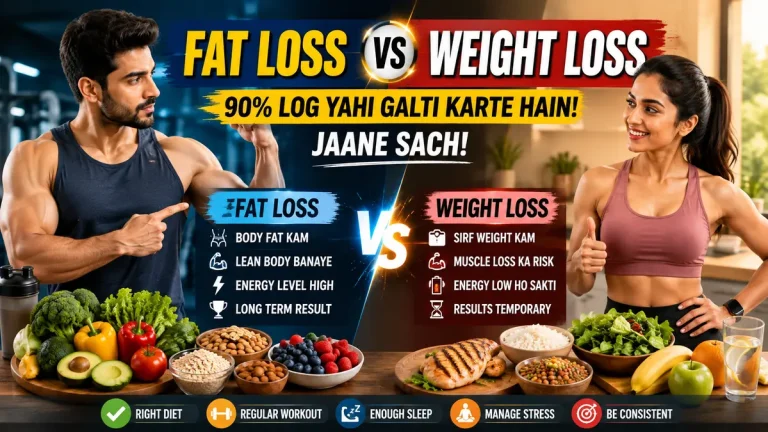
👉🏻Fat Loss vs Weight Loss: 90% Log Yahi Galti Karte Hain, Jaane Sach
Metabolism Slowing Down Ke Possible Signs
Metabolic rate ko ghar par sirf symptoms se accurately measure nahi kiya ja sakta. However, kuch changes lifestyle aur health assessment ki need indicate kar sakte hain.
- Unexpected weight changes
- Persistent low energy
- Reduced physical activity
- Muscle mass ka gradual loss
- Long-term dieting ke baad weight-loss plateau
- Exercise performance mein decline
Ye signs metabolism is slowing down ke specific proof nahi hain. Similar symptoms poor sleep, inadequate nutrition, stress, medical conditions ya other lifestyle factors ki wajah se bhi ho sakte hain.
Metabolism Ko Naturally Support Kaise Karein?
1. Resistance Training Karein
Strength training muscle mass maintain aur build karne ke liye one of the most useful lifestyle strategies hai. Squats, rows, presses, lunges aur other resistance exercises ko weekly routine mein include kiya ja sakta hai.
Muscle tissue metabolically active hota hai, although muscle gain se resting calorie expenditure mein dramatic increase expect nahi karna chahiye. Resistance training ka benefit overall strength, body composition aur physical function mein bhi hota hai.
Regular strength training metabolism is slowing down ke context mein body composition ko support karne ka practical way hai.
2. Protein Intake Adequate Rakhein
Protein muscle maintenance aur repair ke liye essential hai. Weight loss ke dauran adequate protein intake muscle mass preserve karne mein support kar sakta hai.
Protein sources mein eggs, dairy, fish, chicken, lean meat, soy, tofu, beans, lentils aur other protein-rich foods include kiye ja sakte hain.
Daily protein requirement individual body weight, activity level, age aur health status ke according vary karti hai.
3. Daily Movement Increase Karein
Gym ke ek hour ke alawa remaining 23 hours mein ki gayi movement bhi important hai. Walking aur daily activities ko increase karna overall energy expenditure improve kar sakta hai.
- Regular walking
- Stairs ka use
- Short movement breaks
- Household activities
- Long sitting ko frequently break karna
Ye simple habits metabolism is slowing down ke saath associated low activity ko address karne mein useful ho sakti hain.
4. Crash Diet Se Bachein
Fat loss ke liye excessively low calorie intake karna necessary nahi hai. Sustainable calorie deficit generally long-term adherence ke liye better approach hota hai.
Agar aap repeatedly extreme dieting aur overeating ke cycle mein ja rahe hain, to qualified dietitian se personalized guidance lena helpful ho sakta hai.
5. Quality Sleep Ko Priority Dein
Most adults ke liye approximately 7–9 hours sleep ka target useful ho sakta hai, although individual requirements vary karti hain.
Regular sleep schedule, dark bedroom, late-night screen exposure reduce karna aur caffeine ko late hours mein limit karna sleep quality support kar sakta hai.
Metabolism Slowing Down Aur Weight Loss
Weight loss ke dauran calorie requirements gradually decrease ho sakti hain. Agar body weight kam ho gaya hai, to maintenance calories bhi previous level se lower ho sakti hain.
Iska matlab ye nahi ki fat loss impossible ho gaya hai. Aapko current body weight aur activity level ke according calorie intake aur activity ko reassess karna pad sakta hai.
Weight-loss plateau ke case mein portion sizes, liquid calories, snacks, activity levels aur adherence ko honestly review karna useful hai.
Kya Small Meals Metabolism Fast Karte Hain?
Frequent small meals khane se metabolism permanently faster ho jata hai, iska strong evidence nahi hai. Total daily calorie intake aur food composition overall energy balance mein more important role play karte hain.
Kuch people small frequent meals se hunger manage karte hain, jabki others 2–3 larger meals prefer karte hain. Aapke schedule aur preference ke according meal frequency choose ki ja sakti hai.
Metabolism slowing down ko prevent karne ke liye meals ki frequency se zyada overall diet quality aur calorie balance important hain.
👉🏻Ketogenic Diet kya hai?: Basics, Benefits and Complete Diet Plan
👉🏻Body Recomposition Kya Hota Hai? Fat Kam Aur Muscle Gain Ek Saath Kaise Karein?
👉🏻Peanut Butter vs Almond Butter: Muscle Gain, Weight Loss Aur Health Ke Liye Kaunsa Better Hai?
Kya Spicy Food Metabolism Fast Karta Hai?
Spicy foods mein present compounds temporarily thermogenesis ya energy expenditure ko slightly influence kar sakte hain, lekin effect generally small hota hai.
Isliye chili, green tea ya specific “fat-burning” foods ko metabolism boosting solution samajhna realistic nahi hai.
Green Tea Aur Metabolism
Green tea ke compounds energy expenditure aur fat oxidation par modest effects produce kar sakte hain. Lekin ye effect generally small hota hai aur weight loss ka replacement nahi hai.
Agar green tea consume karte hain, to added sugar ko limit karna useful hai. Caffeine sensitivity wale individuals ko timing aur quantity ka dhyan rakhna chahiye.
Water Peene Se Metabolism Fast Hota Hai?
Hydration overall health aur normal physiological functions ke liye essential hai. Water intake se energy expenditure par temporary effect ho sakta hai, lekin excessive water consumption se metabolism dramatically increase nahi hota.
Thirst, climate, exercise aur individual needs ke according adequate fluids consume karna better approach hai.
Metabolism Slowing Down Aur Muscle Loss
Muscle loss metabolic rate ke context mein important factor ho sakta hai. Agar calorie restriction ke saath resistance training aur protein inadequate hain, to lean mass loss ka risk increase ho sakta hai.
Isliye weight loss ke dauran sirf scale weight ko target karne ke bajay body composition aur strength ko bhi monitor karna useful hai.
Resistance training, adequate protein aur moderate calorie deficit metabolism is slowing down ke risk factors ko manage karne ke context mein helpful strategies ho sakti hain.
Cardio Aur Metabolism
Cardio exercises cardiovascular fitness improve karne aur calories expend karne ka effective way hain. Walking, cycling, swimming, jogging aur other aerobic activities routine mein include ki ja sakti hain.
Fat loss ke liye cardio useful hai, lekin muscle preservation ke liye resistance training bhi important hai. Best approach often combination hota hai.
Metabolism Ko Boost Karne Wale Foods?
Koi single food metabolism ko dramatically accelerate nahi karta. However, nutrient-dense foods overall health aur diet quality improve kar sakte hain.
- High-protein foods
- Whole grains
- Vegetables
- Fruits
- Legumes
- Nuts and seeds
- Fish and other lean protein sources
High-protein foods ka thermic effect carbohydrates aur fats se higher hota hai, meaning digestion aur processing ke dauran body comparatively more energy use karti hai.
Metabolism Slowing Down Ko Prevent Karne Ke Liye Simple Routine
Agar aap apne metabolism aur overall body composition ko support karna chahte hain, to ek simple routine follow kiya ja sakta hai:
- Week mein 2–4 resistance training sessions.
- Daily regular walking aur movement.
- Har meal mein suitable protein source.
- Vegetables aur fruits ko diet mein include karna.
- Highly processed foods ko moderate rakhna.
- Regular sleep schedule maintain karna.
- Extreme calorie restriction se avoid karna.
Consistency kisi bhi single “metabolism booster” se zyada important hai.
Kya Metabolism Permanently Slow Ho Sakta Hai?
Metabolic rate life ke different stages mein naturally change ho sakta hai. Weight loss aur body composition changes ke baad energy requirements reduce ho sakti hain.
Lekin “metabolism permanently damaged” jaise claims ko generally oversimplified samajhna chahiye. Lifestyle, body size, muscle mass, activity aur health status metabolism ko influence karte hain.
Metabolism Slowing Down Ke Liye Kab Doctor Se Milna Chahiye?
Agar aapko unexplained weight gain ya weight loss, persistent fatigue, unusual sensitivity to cold or heat, major changes in heart rate, severe weakness ya other concerning symptoms hain, to healthcare professional se consultation karna important hai.
Medical conditions ko sirf diet, supplements ya exercise se self-treat nahi karna chahiye. Appropriate testing aur professional assessment required ho sakta hai.
Frequently Asked Questions
1. Metabolism is slowing down ka kya matlab hai?
Iska matlab hai ki body ka energy expenditure previous level ke comparison mein reduce ho gaya ho sakta hai. Iske reasons body weight, muscle mass, activity, age, diet aur health factors ho sakte hain.
2. Kya age ke saath metabolism slow hota hai?
Age ke saath body composition aur physical activity mein changes ho sakte hain, jo energy expenditure ko influence karte hain. Muscle loss aur reduced activity important contributors ho sakte hain.
3. Kya metabolism ko permanently fast kiya ja sakta hai?
Koi simple food ya supplement metabolism ko permanently dramatically fast nahi karta. Resistance training, muscle maintenance, physical activity, adequate nutrition aur sleep healthy metabolism ko support kar sakte hain.
4. Kya crash dieting metabolism slow kar sakti hai?
Long-term severe calorie restriction body weight aur energy expenditure ko reduce kar sakti hai aur muscle loss ka risk increase kar sakti hai. Sustainable calorie deficit generally better approach hai.
5. Kya muscle gain metabolism ko increase karta hai?
Muscle mass metabolically active hoti hai, isliye muscle gain resting energy expenditure ko somewhat increase kar sakta hai. However, effect ko dramatic metabolism boost ke roop mein expect nahi karna chahiye.
6. Kya exercise metabolism ko improve karti hai?
Regular resistance training muscle mass aur strength maintain karne mein help karti hai, jabki aerobic activity energy expenditure aur cardiovascular fitness support karti hai.
7. Kya green tea metabolism fast karti hai?
Green tea ke compounds energy expenditure par modest temporary effects produce kar sakte hain, lekin effect small hota hai aur green tea weight loss ya metabolism improvement ka replacement nahi hai.
8. Kya metabolism slow hone se weight loss ruk jata hai?
Weight loss ke saath calorie requirements reduce ho sakti hain, jisse progress slow ho sakti hai. Lekin plateau ke other reasons bhi ho sakte hain, including calorie intake, activity aur adherence.
9. Metabolism ko support karne ke liye kya khana chahiye?
Protein-rich foods, vegetables, fruits, whole grains, legumes, nuts, seeds aur other minimally processed foods ko balanced diet mein include karna useful hai.
10. Metabolism slowing down ko kaise manage karein?
Resistance training, sufficient protein, regular physical activity, adequate sleep aur sustainable calorie intake ko priority dein. Persistent unexplained symptoms hone par healthcare professional se consult karein.
Final Verdict
Metabolism slowing down ek single-cause problem nahi hai. Age, body weight, muscle mass, activity level, sleep, diet aur medical conditions sab metabolic rate ko influence kar sakte hain.
Agar aapko lagta hai ki metabolism slow ho gaya hai, to extreme “metabolism boosting” diets ya supplements ke peeche jaane ke bajay fundamentals par focus karein. Resistance training se muscle mass support karein, daily movement maintain karein, sufficient protein consume karein, crash dieting avoid karein aur sleep ko priority dein.
Sabse important baat ye hai ki weight-loss plateau ya fatigue ko automatically slow metabolism ka proof na samjhein. Agar unusual symptoms persist kar rahe hain, professional medical evaluation appropriate rahega.
Disclaimer
Disclaimer: Yeh article general health, nutrition aur fitness education ke purpose se diya gaya hai. Yeh medical diagnosis, treatment ya personalized medical advice ka substitute nahi hai. Metabolism, unexplained weight changes, thyroid problems ya other health concerns ke case mein qualified doctor ya registered dietitian se consultation karein. Kisi bhi extreme diet, supplement ya exercise program ko start karne se pehle apni individual health condition aur requirements ko consider karein.