
Intermittent Fasting vs Calorie Deficit: 2026 Ki Latest Research Mein Weight Loss Ke Liye Kaun Better Hai?
Intermittent Fasting vs Calorie Deficit: 2026 Ki Latest Research Mein Weight Loss Ke Liye Kaun Better Hai?
Aajkal weight loss ki baat hoti hai toh do popular methods ka naam zaroor sunne ko milta hai: Intermittent Fasting vs Calorie Deficit. Koi kehta hai 16 ghante fasting karo, toh koi suggest karta hai ki bas daily calories kam kar do.
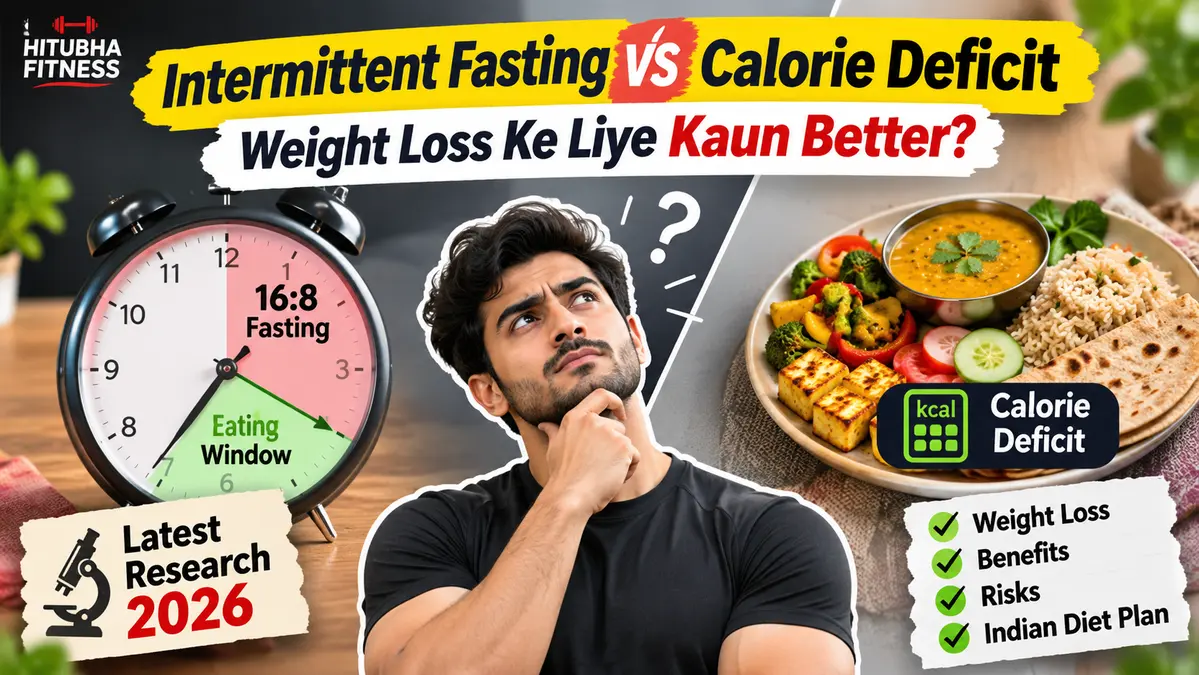
Lekin ek interesting sawaal hai: agar dono methods se weight loss ho sakta hai, toh scientifically better kaunsa hai?
Sochiye, aap subah office jaate hain, dopahar mein ghar ka khana khaate hain aur shaam ko family ke saath dinner karte hain. Kya weight loss ke liye breakfast skip karna zaroori hai? Ya phir roti, dal, chawal aur sabzi khaate hue bhi body fat kam kiya ja sakta hai?
Achhi baat ye hai ki weight loss ke liye aapko har favourite food chhodne ki zaroorat nahi hai.
2025 aur 2026 ki scientific research ne fasting aur calorie restriction ke beech ka comparison aur clear kar diya hai. Is article mein hum research findings, benefits, disadvantages, Indian meal examples aur practical tips samjhenge.
Intermittent Fasting vs Calorie Deficit: Quick Answer
Short answer: Dono methods weight loss mein effective ho sakte hain. Lekin latest evidence ke according intermittent fasting, regular calorie restriction se generally zyada effective prove nahi hua hai.
February 2026 ki Cochrane systematic review mein 22 studies aur 1,995 adults ko evaluate kiya gaya. Researchers ne conclude kiya ki traditional dietary advice ke comparison mein intermittent fasting se weight loss mein little to no difference ho sakta hai.
Iska simple matlab hai ki agar aap fasting comfortably follow kar sakte hain, toh ye useful option hai. Agar aapko regular meals pasand hain, toh calorie deficit bhi effective approach ho sakta hai.
Sabse important factor hai consistency, nutrition quality aur long-term sustainability.
Intermittent Fasting Kya Hai?
Intermittent fasting ek eating pattern hai jisme aap din ke kuch specific hours mein khana khaate hain aur baaki time fasting karte hain.
Is method mein main focus hota hai aap kab khate hain, na ki sirf aap kya khate hain.
1. 16:8 Intermittent Fasting
Is popular method mein 16 ghante fasting aur 8 ghante eating window hoti hai.
- 12:00 PM – First meal
- 4:00 PM – Healthy snack
- 7:30 PM – Dinner
- 8:00 PM se agle din 12:00 PM – Fasting
Fasting ke dauran plain water, bina sugar ki black coffee ya plain tea generally use ki ja sakti hai, agar aapki health condition allow karti ho.
2. 14:10 Fasting
Beginners ke liye comparatively flexible option hai. Ismein 14 ghante fasting aur 10 ghante eating window hoti hai.
Example: Subah 9 baje breakfast aur shaam 7 baje dinner complete karna.
3. 5:2 Fasting Method
Is pattern mein hafte ke paanch din regular eating hoti hai, jabki do non-consecutive days mein calorie intake significantly reduce kiya jata hai.
Ye method har kisi ke liye suitable nahi hai, especially agar diabetes medicines, weakness ya nutritional deficiencies ka risk ho.
Calorie Deficit Kya Hai Aur Kaise Kaam Karta Hai?
Calorie deficit ka simple meaning hai ki aap apni body ki daily energy requirement se kam calories consume karte hain.
Hamari body ko breathing, digestion, walking, exercise aur normal daily activities ke liye energy chahiye hoti hai.
Jab food se milne wali energy, body ki total energy expenditure se kam hoti hai, toh body stored energy ka use karti hai. Samay ke saath isse body weight aur fat mass reduce ho sakte hain.
Calorie Deficit Example
Maan lijiye kisi adult ki estimated maintenance requirement 2,200 calories daily hai.
- Maintenance calories: 2,200 kcal
- Daily food intake: 1,800 kcal
- Estimated daily deficit: 400 kcal
Ye sirf illustration hai. Actual calorie requirement age, sex, height, weight, muscle mass aur physical activity par depend karti hai.
Har din exactly same deficit maintain karna zaroori nahi. Weekly average aur long-term eating habits bhi important hain.
Important: Calorie deficit ka matlab bhookhe rehna nahi hai. Aap balanced meals, adequate protein, fruits, vegetables aur whole grains ke saath bhi calorie intake manage kar sakte hain.
Intermittent Fasting vs Calorie Deficit: Complete Comparison
| Feature | Intermittent Fasting | Calorie Deficit |
|---|---|---|
| Main Focus | Eating timing | Total energy intake |
| Weight Loss | Effective ho sakta hai | Effective ho sakta hai |
| Meal Timing | Restricted eating window | Flexible |
| Calorie Counting | Compulsory nahi | Helpful, compulsory nahi |
| Hunger | Fasting hours mein badh sakti hai | Food selection par depend |
| Family Meals | Timing adjust karni pad sakti hai | Generally easier |
| Muscle Preservation | Protein aur exercise important | Protein aur exercise important |
| Best For | Fixed eating schedule pasand karne wale | Flexible meal timing chahne wale |
Comparison se ek baat clear hoti hai: dono approaches mutually exclusive nahi hain. Intermittent fasting ke saath bhi calorie deficit ho sakta hai.
Latest Research 2026: Scientists Kya Kehte Hain?
Study 1: Cochrane Review 2026
February 2026 mein published Cochrane review ne 22 studies ke results analyze kiye. In studies mein 1,995 adults with overweight or obesity shamil the.
Researchers ko intermittent fasting aur conventional dietary advice ke beech weight loss mein clinically meaningful difference ka clear evidence nahi mila.
Review ne ye bhi highlight kiya ki available studies mostly 12 months ya usse kam duration ki thi. Isliye long-term outcomes par additional research ki zaroorat hai.
Research source:
Cochrane Review 2026
Study 2: BMJ 2025 Meta-Analysis
BMJ mein published ek large network meta-analysis ne 99 randomized clinical trials aur 6,582 adults ka data evaluate kiya.
Research mein intermittent fasting aur continuous energy restriction, dono approaches ne unrestricted eating ke comparison mein weight reduce kiya.
Alternate-day fasting ne continuous calorie restriction ke comparison mein average 1.29 kg additional weight reduction show kiya. Lekin ye relatively small difference tha aur sabhi fasting methods mein nahi dekha gaya.
Isliye ye kehna scientifically correct nahi hoga ki har type ki fasting calorie restriction se better hai.
Research source:
BMJ Systematic Review
Study 3: September 2026 Research Review
September 2026 mein Food Science & Nutrition journal mein published systematic review ne intermittent fasting ke different protocols evaluate kiye.
Review mein fasting interventions ke saath body weight reduction dekhi gayi. Lekin continuous calorie restriction ke comparison mein statistically significant superiority establish nahi hui.
Researchers ne personalized eating strategies aur long-term research ki importance highlight ki.
Research source:
PubMed – September 2026 Review
Kya Intermittent Fasting Se Belly Fat Jaldi Kam Hota Hai?
Belly fat loss ke liye intermittent fasting ko aksar special solution ke roop mein promote kiya jata hai.
Lekin reality thodi different hai.
Fasting karne se aapki overall calorie intake reduce ho sakti hai. Agar aap fewer calories consume karte hain, toh time ke saath body fat kam ho sakta hai.
Par fasting automatically belly fat ko target nahi karti.
Body fat reduction genetics, hormones, energy balance, sleep, physical activity aur lifestyle factors se influence hota hai.
Example: Agar koi person 16 ghante fast karta hai, lekin eating window mein consistently apni energy requirement se zyada calories consume karta hai, toh weight loss nahi bhi ho sakta.
Isi tarah regular meals lene wala person balanced calorie deficit maintain karke fat loss achieve kar sakta hai.
Related reading:
HITUBHA FITNESS Belly Fat Guides.
Muscle Loss Ka Risk: Kaunsa Method Better Hai?
Weight loss ke dauran sirf weighing scale par number kam hona enough nahi hai. Muscle mass preserve karna bhi important hai.
Agar aap bahut aggressive dieting karte hain, insufficient protein lete hain aur strength training nahi karte, toh muscle loss ka risk badh sakta hai.
Ye risk fasting aur calorie restriction, dono methods mein ho sakta hai.
Muscle Preserve Karne Ke Practical Tips
- Har meal mein suitable protein source include karein.
- Hafte mein kam se kam do din strength training karein.
- Crash dieting aur extreme calorie restriction avoid karein.
- Recovery aur sleep ko importance dein.
- Body weight ke saath strength progress bhi monitor karein.
Indian protein options mein paneer, tofu, dal, chana, soy chunks, curd, milk aur eggs include kiye ja sakte hain.
Related article:
Plant Protein vs Whey Protein Guide.
Indian Diet Mein Intermittent Fasting Kaise Follow Karein?
Indian meals ke saath fasting follow karna possible hai. Zaroori nahi ki aap expensive diet foods, imported snacks ya special supplements kharidein.
Yahan ek simple 14:10 eating-window example diya gaya hai.
Sample 14:10 Indian Meal Schedule
| Time | Meal |
|---|---|
| 9:00 AM | Vegetable besan chilla + curd |
| 1:00 PM | Roti + dal + sabzi + salad |
| 4:30 PM | Fruit + roasted chana |
| 6:30 PM | Paneer/tofu bhurji + roti + vegetables |
| 7:00 PM | Eating window complete |
Ye meal schedule sirf educational example hai. Portion sizes aur total calories individual needs ke according adjust honi chahiye.
Agar aap night shift mein kaam karte hain, toh meal timing ko sleep schedule aur work routine ke saath align karna zyada practical ho sakta hai. Har kisi ke liye 12 PM se 8 PM eating window suitable nahi hoti.
Indian Calorie Deficit Diet Plan Example
Calorie deficit follow karne ke liye bhi ghar ka normal Indian food kaafi useful ho sakta hai.
Simple Balanced Meal Plan
- Breakfast: Vegetable oats + curd ya egg bhurji
- Mid-Morning: Seasonal fruit
- Lunch: Roti + dal + seasonal sabzi + salad
- Evening Snack: Roasted chana ya unsweetened curd
- Dinner: Paneer/tofu + vegetables + suitable roti or rice portion
Is plan ka calorie deficit portion sizes, oil quantity, beverages, snacks aur individual maintenance calories par depend karega.
Roti aur rice completely eliminate karne ki zaroorat nahi hai. Portion control, adequate protein aur overall diet quality par focus karein.
Related reading:
Brown Rice vs White Rice.
Intermittent Fasting Ke Possible Benefits
1. Simple Eating Schedule
Kuch logon ke liye fixed eating window follow karna calorie counting se easier hota hai.
2. Unnecessary Snacking Reduce Ho Sakti Hai
Late-night snacking limit karne se kuch log naturally fewer calories consume karte hain.
3. Weight Management Mein Help
Research ke according intermittent fasting weight loss ke liye ek useful option ho sakta hai, especially jab person ise consistently follow kar sake.
4. Blood Sugar Management
Kuch clinical trials mein adults with type 2 diabetes ke blood sugar markers improve hue hain. Lekin diabetes medicines lene wale individuals ko fasting start karne se pehle doctor ki guidance leni chahiye.
NIH research:
Intermittent Fasting and Type 2 Diabetes.
Calorie Deficit Ke Possible Benefits
1. Flexible Eating Pattern
Aap breakfast, lunch aur dinner apne routine ke according manage kar sakte hain.
2. Family Meals Ke Saath Easy Adjustment
Indian households mein family ke saath khana important hota hai. Calorie deficit approach mein eating window restrict karna zaroori nahi hota.
3. Food Variety Maintain Kar Sakte Hain
Balanced portions ke saath dal, roti, rice, paneer, fruits aur vegetables include kiye ja sakte hain.
4. Exercise Schedule Ke Saath Flexibility
Workout se pehle aur baad nutrition plan karna relatively convenient ho sakta hai.
Intermittent Fasting vs Calorie Deficit: 7 Common Mistakes
- Fasting ke baad overeating: Eating window mein excessive portions lene se calorie deficit disappear ho sakta hai.
- Protein ignore karna: Inadequate protein muscle preservation ko difficult bana sakta hai.
- Crash dieting: Extreme calorie restriction se fatigue aur nutrient deficiencies ka risk ho sakta hai.
- Liquid calories ignore karna: Sweet tea, cold drinks aur sugary coffee bhi calories provide karte hain.
- Sleep ko importance na dena: Poor sleep hunger aur appetite management ko affect kar sakti hai.
- Exercise completely skip karna: Regular activity aur strength training overall health ke liye important hain.
- Daily weight fluctuations se panic: Water retention, digestion aur salt intake ki wajah se scale weight change ho sakta hai.
Related article:
Morning vs Evening Workout.
Intermittent Fasting Kis Ke Liye Suitable Nahi Ho Sakti?
Fasting har individual ke liye safe ya appropriate nahi hoti.
Pregnant ya breastfeeding women, children aur adolescents, eating disorder history wale individuals, aur severe hypoglycemia history wale logon ko intermittent fasting avoid karni chahiye, jab tak appropriate specialist care mein koi specific medical reason na ho.
Diabetes medicines, especially insulin ya sulfonylureas, lene wale individuals ko bina medical supervision fasting start nahi karni chahiye. Medicines ki dose khud se change na karein.
Older adults, frailty ya muscle loss risk wale logon ko bhi individualized nutritional guidance ki zaroorat ho sakti hai.
Beginners Ke Liye Kaunsa Method Better Hai?
Agar aap bilkul beginner hain, toh pehle apne current eating habits observe karein.
Kya aap unnecessary snacking karte hain? Kya sugary drinks zyada consume karte hain? Kya meals mein protein kam hai? Kya aapko baar-baar extreme hunger feel hoti hai?
In questions ke answers aapko suitable approach choose karne mein help karenge.
Agar fixed meal timing aapki lifestyle mein easily fit hoti hai, toh medically suitable hone par gentle time-restricted eating consider ki ja sakti hai.
Agar aapko flexible eating schedule chahiye, toh balanced calorie deficit practical choice ho sakta hai.
Har situation mein gradual changes, adequate nutrition aur consistency ko priority dein.
Weight Loss Ke Liye 5 Practical Habits
- Protein-rich meals: Dal, eggs, paneer, tofu aur legumes ko regularly include karein.
- Daily movement: Walking aur normal physical activity badhayein.
- Strength training: Muscle preservation aur functional fitness ke liye resistance exercises karein.
- Quality sleep: Apne routine ke according sufficient, consistent sleep lein.
- Progress tracking: Weight trends, waist measurement, energy aur workout performance observe karein.
Related guide:
Zone 2 Cardio Benefits.
Frequently Asked Questions (FAQs)
1. Intermittent Fasting vs Calorie Deficit: Weight loss ke liye kaunsa better hai?
2026 ki available research ke according intermittent fasting traditional calorie restriction se generally superior nahi hai. Dono effective ho sakte hain. Aapke liye better method wahi hai jo nutritionally balanced aur long term maintainable ho.
2. Kya intermittent fasting bina calorie deficit ke weight loss kar sakti hai?
Fasting se meal timing change hoti hai, lekin sustained fat loss ke liye overall energy balance important rehta hai. Agar calorie intake consistently energy expenditure se zyada ho, toh fasting ke bawajood weight gain possible hai.
3. Kya 16:8 fasting se belly fat kam hota hai?
16:8 fasting kuch logon ko overall calorie intake reduce karne mein help kar sakti hai. Lekin ye specifically belly fat target nahi karti.
4. Kya calorie deficit mein roti aur chawal kha sakte hain?
Haan. Suitable portions ke saath roti, chawal, dal, sabzi aur protein-rich foods balanced weight loss diet ka part ho sakte hain.
5. Kya intermittent fasting aur calorie deficit saath follow kar sakte hain?
Haan, dono combine ho sakte hain. Lekin unnecessarily severe restriction se bachna chahiye aur nutritional requirements meet karni chahiye.
6. Kya fasting se muscle loss hota hai?
Muscle loss ka risk inadequate protein, aggressive energy restriction aur strength training ki kami se badh sakta hai. Ye risk kisi bhi restrictive weight loss approach mein ho sakta hai.
7. Kya intermittent fasting diabetes patients ke liye safe hai?
Kuch adults with type 2 diabetes ke liye medical supervision mein useful ho sakti hai. Lekin glucose-lowering medicines lene wale patients ko hypoglycemia risk ke liye doctor se personalized advice leni chahiye.
8. Weight loss ke results kitne din mein dikhte hain?
Results starting weight, calorie intake, activity, sleep aur individual health par depend karte hain. Initial scale changes mein water weight bhi contribute kar sakta hai. Sustainable progress ko weeks aur months ke trend se evaluate karna better hai.
Final Verdict: Intermittent Fasting vs Calorie Deficit
Latest research ka message simple hai: weight loss ke liye koi single magic eating schedule nahi hai.
Intermittent fasting ek useful strategy ho sakti hai agar aapko fixed eating window follow karna easy lagta hai. Calorie deficit approach un logon ke liye convenient ho sakti hai jo apne normal meal schedule ke saath portions manage karna chahte hain.
Dono methods mein balanced nutrition, physical activity, adequate protein aur long-term consistency important hain.
Isliye sirf trend follow karne ke bajay apni health, lifestyle aur food preferences ke according decision lena better hai.
HITUBHA FITNESS Tip: Aisi diet choose karein jise aap sirf 15 din nahi, balki lambe samay tak comfortably follow kar sakein. Healthy weight management ek sustainable lifestyle process hai, punishment nahi.
Medical Disclaimer
Disclaimer: Yeh article educational aur informational purposes ke liye hai. Ismein di gayi information professional medical advice, diagnosis ya treatment ka substitute nahi hai. Fasting ya calorie restriction start karne se pehle qualified healthcare professional ya registered dietitian se advice lein, especially agar aap pregnant hain, breastfeeding kar rahi hain, diabetes ya kisi chronic medical condition ke saath jee rahe hain, medicines lete hain, ya eating disorder history hai. Individual calorie requirements aur nutritional needs alag ho sakti hain.