
Micro Aur Macro Nutrients Kya Hai? Difference, Sources & Daily Diet Guide
Micro Aur Macro Nutrients Kya Hai? Difference, Sources & Daily Diet Guide
Micro aur macro nutrients kya hai? Ye samajhna healthy diet, fitness, muscle gain, fat loss aur overall health ke liye bahut important hai. Hamari body ko energy, muscle repair, immunity, hormones, bones, brain function aur daily activities ke liye alag-alag nutrients ki zarurat hoti hai. In nutrients ko broadly do major groups mein divide kiya jata hai: macronutrients aur micronutrients.
Macronutrients ki body ko relatively large amounts mein zarurat hoti hai, jabki micronutrients ki requirement comparatively chhoti quantity mein hoti hai. Lekin iska matlab ye nahi hai ki micronutrients less important hain.
Protein, carbohydrates aur fats energy aur body structure mein important role play karte hain, jabki vitamins aur minerals metabolism, immunity, blood formation, bones aur numerous physiological functions ko support karte hain.
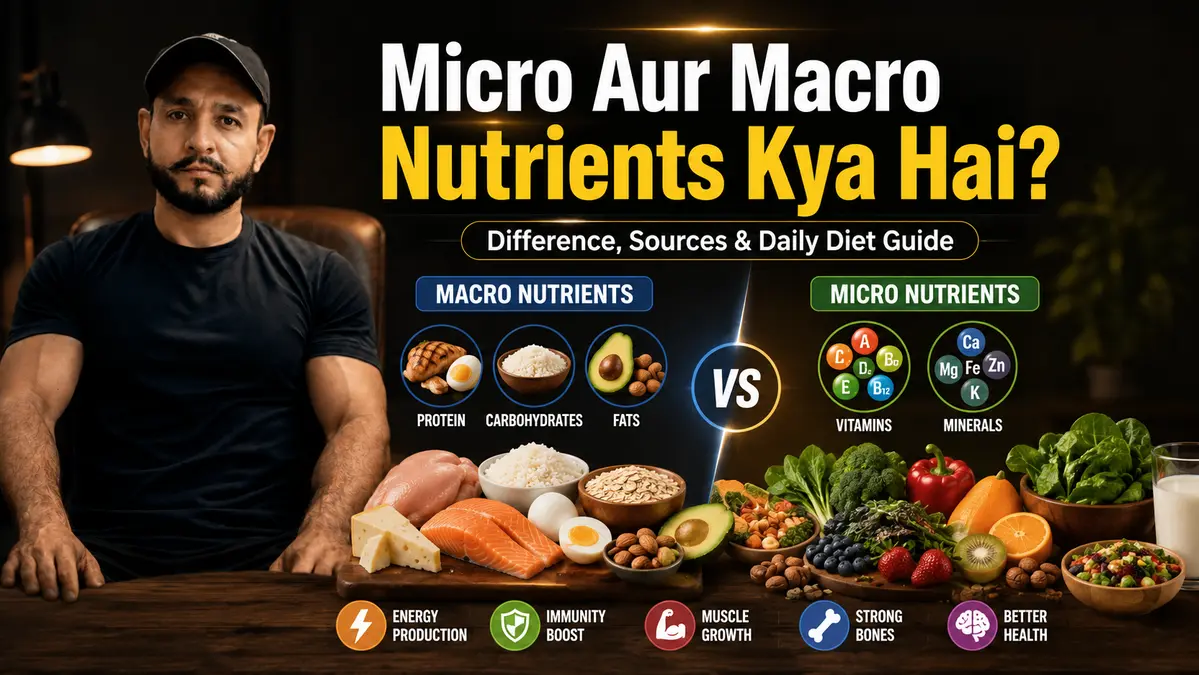
Is article mein hum simple language mein samjhenge ki micro aur macro nutrients kya hai, inmein kya difference hai, kaunse foods best sources hain, fitness goals ke liye ye kyun important hain aur balanced diet mein inhe kaise include kiya ja sakta hai.
Micro Aur Macro Nutrients Kya Hai?
Macronutrients wo nutrients hain jinhe body ko relatively large amounts mein chahiye. Inmein mainly protein, carbohydrates aur fats shamil hote hain. Ye nutrients energy provide karne ke saath body ke tissues, muscles aur other biological processes mein important role play karte hain.
Micronutrients vitamins aur minerals hote hain. Body ko inki quantity bahut kam chahiye hoti hai, lekin ye normal growth, metabolism, immunity, nervous system, bones, blood formation aur many other functions ke liye essential ho sakte hain.
Simple words mein:
- Macronutrients = Protein, Carbohydrates aur Fats
- Micronutrients = Vitamins aur Minerals
Healthy diet mein dono groups ka proper balance important hai.
👉🏻Plant Protein vs Whey Protein: Muscle Gain, Fat Loss & Recovery Ke Liye Kaunsa Better?
👉🏻Morning Exercise vs Evening Workout: Fat Loss, Muscle Gain & Health Ke Liye Kaunsa Better Hai?
Macronutrients Kya Hote Hain?
Macronutrients body ko energy aur building materials provide karte hain. Fitness aur nutrition ke context mein inhe bahut importance di jati hai.
1. Protein
Protein body ka important structural nutrient hai. Muscles, skin, enzymes, hormones aur many other body components mein proteins ka role hota hai. Resistance training karne wale individuals ke liye adequate protein muscle repair aur muscle growth ko support karne mein particularly important hai.
Protein ke good food sources mein eggs, milk, curd, paneer, fish, chicken, soy, tofu, lentils, beans, chickpeas, peas, nuts aur seeds shamil ho sakte hain.
Agar aap muscle gain karna chahte hain, to sirf protein powder par depend karne ke bajay daily diet mein different protein-rich foods include karna practical approach hai.
2. Carbohydrates
Carbohydrates body ke liye an important source of energy hain. Glucose body ke cells ke liye fuel ke roop mein use ho sakta hai, aur physical activity ke dauran carbohydrates ka role particularly relevant hota hai.
Carbohydrates ke healthy sources mein oats, brown rice, whole wheat, roti, potatoes, sweet potatoes, fruits, vegetables, beans aur other whole or minimally processed foods shamil hain.
Carbohydrates ko completely eliminate karna zaroori nahi hai. Food quality aur total calorie intake ko consider karna zyada important hai.
3. Fats
Dietary fats bhi body ke liye important hain. Fats energy provide karte hain aur cell membranes aur several biological functions mein role play karte hain. Certain vitamins ki absorption ke liye dietary fat bhi important hota hai.
Healthy fat sources mein nuts, seeds, peanut butter, avocado, olive oil aur certain fish shamil ho sakte hain. However, fats calorie-dense hote hain, isliye portion size important hai, especially agar aap fat loss goal follow kar rahe hain.
Micronutrients Kya Hote Hain?
Micronutrients mainly vitamins aur minerals hote hain. Body ko inki requirement macronutrients ki comparison mein bahut kam hoti hai, lekin ye numerous physiological processes ke liye necessary hote hain.
Vitamins
Vitamins organic compounds hote hain jo body ke different functions mein help karte hain. Different vitamins ke different roles hote hain.
Important vitamins mein vitamin A, B-group vitamins, vitamin C, vitamin D, vitamin E aur vitamin K shamil hain.
Fruits, vegetables, dairy products, eggs, whole grains, nuts, seeds aur other nutrient-rich foods different vitamins provide kar sakte hain.
Minerals
Minerals inorganic nutrients hain jo body ke various functions ke liye important hote hain. Calcium, iron, magnesium, potassium, zinc, phosphorus aur iodine important examples hain.
Minerals ka role bones, muscles, nerves, blood formation, fluid balance aur other physiological functions mein ho sakta hai.
👉🏻Ayurvedic Diet for Fat Loss: 10 Simple Foods & Daily Habits That May Help
👉🏻Instant Oats vs Rolled Oats: Which Is Better for Weight Loss, Muscle Gain & Daily Health?
Micro Aur Macro Nutrients Mein Difference
Micro aur macro nutrients ka main difference unki required quantity aur classification mein hai.
| Feature | Macronutrients | Micronutrients |
|---|---|---|
| Main types | Protein, carbohydrates, fats | Vitamins and minerals |
| Required amount | Relatively large amount | Relatively small amount |
| Main role | Energy, tissue building and body functions | Metabolism, immunity, bones and physiological functions |
| Calories | Protein, carbohydrates and fats can provide calories | Vitamins and minerals do not provide meaningful calories |
| Examples | Protein, rice, oats, nuts and oils | Vitamin C, vitamin D, iron, calcium and zinc |
Macro Nutrients Se Kitni Energy Milti Hai?
Macronutrients mein protein aur carbohydrates approximately 4 calories per gram provide karte hain, jabki dietary fat approximately 9 calories per gram provide karta hai.
Isliye fat calorie-dense nutrient hai. Iska matlab ye nahi ki fat unhealthy hai. Body ko dietary fats ki zarurat hoti hai, lekin calorie intake manage karte waqt portion sizes ko consider karna useful hai.
Alcohol technically macronutrient category ka part nahi maana jata in the same nutritional classification, although it provides approximately 7 calories per gram.
Muscle Gain Ke Liye Macro Aur Micro Nutrients Kyun Important Hain?
Muscle gain ke liye resistance training ke saath adequate nutrition important hai. Protein muscle repair aur growth ke liye essential building material provide karta hai, jabki carbohydrates training ke liye energy aur glycogen replenishment mein help kar sakte hain.
Dietary fats bhi overall health aur normal physiological functions ke liye important hain. Meanwhile, vitamins aur minerals normal metabolism, bone health, nervous system aur other processes ko support karte hain.
Isliye muscle gain diet ko sirf protein shake aur calories tak limit karna ideal approach nahi hai. A balanced diet mein micronutrient-rich foods bhi hone chahiye.
👉🏻Belly Fat Kam Karne Ke 7 Natural Tarike
👉🏻₹5 Ki Black Coffee vs Expensive Pre-Workout — Kya Sach Me Same Power Deti Hai?
Fat Loss Ke Liye Macronutrients Ka Role
Fat loss primarily sustained calorie deficit se associated hai. Iska matlab hai ki long term mein body ko use hone wali energy se kam calories consume karna padta hai.
Protein fat loss ke dauran muscle mass preserve karne mein useful ho sakta hai, particularly when combined with resistance training. Carbohydrates physical activity ke liye energy provide kar sakte hain, jabki dietary fats satiety aur normal body functions mein contribute karte hain.
Fat loss ke liye kisi ek macronutrient ko completely eliminate karna necessary nahi hai. Diet aisi honi chahiye jo nutritionally adequate, practical aur long term follow karna possible ho.
Micronutrients Health Ke Liye Kyun Important Hain?
Micronutrients body mein numerous functions ko support karte hain. For example, iron red blood cell formation mein important hai, calcium bones aur teeth ke liye important hai, vitamin C normal immune function aur collagen formation mein role play karta hai, aur vitamin D calcium metabolism aur bone health se related hai.
Different micronutrients ke different functions hain, isliye ek single vitamin ya mineral ko complete nutrition ka replacement nahi maana ja sakta.
Variety of fruits, vegetables, whole grains, pulses, nuts, seeds, dairy or suitable alternatives aur other nutrient-rich foods consume karna micronutrient diversity improve karne ka practical way hai.
Best Foods for Macronutrients
Aapki daily diet mein different food groups ko include karke macronutrients easily obtain kiye ja sakte hain.
Protein-Rich Foods
- Eggs
- Milk and curd
- Paneer
- Chicken
- Fish
- Tofu and soy foods
- Lentils and dals
- Chickpeas and beans
- Nuts and seeds
Carbohydrate-Rich Foods
- Oats
- Rice
- Whole wheat roti
- Potatoes
- Sweet potatoes
- Fruits
- Whole grains
- Beans and legumes
Healthy Fat Sources
- Almonds
- Walnuts
- Peanuts
- Seeds
- Avocado
- Olive oil
- Fatty fish
- Nut butters
Best Foods for Micronutrients
Micronutrients ke liye dietary variety important hai. Different foods different vitamins aur minerals provide karte hain.
- Leafy green vegetables: Folate, vitamin K aur several minerals.
- Citrus fruits: Vitamin C ka useful source.
- Carrots and other colorful vegetables: Carotenoids aur other plant compounds.
- Dairy foods: Calcium, protein aur other nutrients.
- Nuts and seeds: Magnesium, vitamin E, healthy fats aur other nutrients.
- Legumes: Protein, iron, folate and other nutrients.
- Eggs: Protein aur several vitamins and minerals.
- Fish: Protein aur selected micronutrients ke saath healthy fats provide kar sakti hai.
Kya Sirf Healthy Food Khane Se All Nutrients Mil Jayenge?
Balanced diet se many essential nutrients adequate amounts mein mil sakte hain, lekin individual nutritional requirements different hoti hain.
Age, sex, activity level, dietary restrictions, pregnancy, medical conditions aur other factors nutrient requirements ko affect kar sakte hain.
Kuch individuals mein specific nutrient deficiency ka risk higher ho sakta hai. Aise cases mein doctor ya qualified dietitian dietary assessment aur appropriate supplementation suggest kar sakte hain.
Kya Multivitamin Lena Zaroori Hai?
Har healthy person ke liye multivitamin automatically necessary nahi hai. Ideally, nutrients ka major portion balanced diet se obtain karna chahiye.
Supplementation ka decision individual requirements aur deficiency risk par depend karta hai. Unnecessary high-dose supplements lena beneficial hone ke bajay problems create kar sakta hai.
Agar aapko kisi particular vitamin ya mineral ki deficiency ka doubt hai, to healthcare professional se consultation aur appropriate testing useful ho sakti hai.
Balanced Diet Mein Micro Aur Macro Nutrients Kaise Include Karein?
Ek simple approach hai ki meals ko different food groups ke combination ke around plan karein.
For example, breakfast mein oats ke saath milk/curd aur fruit liya ja sakta hai. Lunch mein roti ya rice ke saath dal, vegetables aur curd include kiya ja sakta hai. Dinner mein protein source, vegetables aur suitable carbohydrate source rakha ja sakta hai.
Snacks ke liye fruit, nuts, yogurt, roasted chickpeas ya other nutrient-rich options choose kiye ja sakte hain.
Is type ki dietary variety se aapko protein, carbohydrates, fats, vitamins, minerals aur other beneficial compounds different foods se mil sakte hain.
Micro Aur Macro Nutrients: Common Mistakes
1. Sirf Protein Par Focus Karna
Fitness enthusiasts kabhi-kabhi protein ko diet ka sabse important nutrient samajh lete hain. Protein important hai, lekin balanced diet ke liye carbohydrates, fats, vitamins aur minerals bhi necessary hain.
2. Carbohydrates Ko Completely Avoid Karna
Carbohydrates ko completely avoid karna generally necessary nahi hai. Whole grains, fruits, vegetables aur legumes jaise nutrient-rich carbohydrate sources healthy diet ka part ho sakte hain.
3. Fats Se Darna
Dietary fat body ke liye important hai. Focus healthy fat sources aur appropriate portion sizes par hona chahiye.
4. Supplements Ko Food Ka Replacement Samajhna
Supplements selected nutritional gaps ko address karne mein useful ho sakte hain, lekin supplements balanced diet ka complete replacement nahi hain.
5. Food Variety Ignore Karna
Roz same limited foods khane se dietary variety reduce ho sakti hai. Different fruits, vegetables, grains, pulses aur protein sources ko rotate karna nutritional diversity improve kar sakta hai.
Micro Aur Macro Nutrients Kya Hai? Final Verdict
Micro aur macro nutrients kya hai iska simple answer ye hai ki macronutrients mein mainly protein, carbohydrates aur fats aate hain, jabki micronutrients mein vitamins aur minerals shamil hote hain.
Macronutrients body ko energy aur structural building materials provide karte hain, jabki micronutrients body ke metabolism, immunity, bones, blood formation, nervous system aur many other functions ko support karte hain.
Fitness goal chahe muscle gain ho, fat loss ho ya general health, sirf calories aur protein par focus karna enough nahi hai. A balanced diet mein adequate protein, quality carbohydrates, healthy fats, fruits, vegetables, whole grains, pulses aur other nutrient-rich foods ko include karna important hai.
Long-term health ke liye best approach generally extreme restriction ke bajay balanced, varied aur sustainable diet hoti hai.
Frequently Asked Questions About Micro And Macro Nutrients
1. Micro aur macro nutrients kya hai?
Macronutrients mainly protein, carbohydrates aur fats hote hain jinhe body relatively large amounts mein use karti hai. Micronutrients vitamins aur minerals hote hain jinhe body smaller quantities mein require karti hai.
2. Macronutrients ke main types kaunse hain?
Macronutrients ke three primary types protein, carbohydrates aur dietary fats hain. Ye energy provide karne aur body ke structural aur physiological functions ko support karne mein important role play karte hain.
3. Micronutrients ke examples kya hain?
Micronutrients mein vitamins aur minerals aate hain. Vitamin A, vitamin C, vitamin D, vitamin B12, iron, calcium, magnesium, zinc aur potassium kuch examples hain.
4. Kya vitamins aur minerals calories provide karte hain?
Vitamins aur minerals meaningful amounts mein calories provide nahi karte. Ye body ke different physiological processes ko support karte hain.
5. Muscle gain ke liye kaunsa nutrient sabse important hai?
Muscle gain ke liye adequate protein important hai, lekin sirf protein sufficient nahi hai. Progressive resistance training, adequate calories, carbohydrates, fats, micronutrients aur proper recovery bhi important factors hain.
6. Fat loss ke liye micronutrients important hain?
Yes. Fat loss ka primary factor calorie deficit hai, lekin micronutrients overall health aur normal physiological functions ko support karte hain. Isliye fat-loss diet nutritionally balanced honi chahiye.
7. Kya carbohydrates unhealthy hote hain?
Nahi. Carbohydrates body ke liye an important energy source hain. Whole grains, fruits, vegetables, potatoes aur legumes jaise minimally processed carbohydrate sources balanced diet ka part ho sakte hain.
8. Kya dietary fat zaroori hai?
Yes. Dietary fats body ke liye important hain aur several physiological functions mein role play karte hain. Nuts, seeds, suitable oils aur fish jaise sources healthy diet mein include kiye ja sakte hain.
9. Kya multivitamin har kisi ko lena chahiye?
Nahi. Har person ko multivitamin ki zarurat nahi hoti. Supplementation individual dietary intake aur nutrient requirements par depend karti hai.
10. Micro aur macro nutrients ka best source kya hai?
Ek single food all nutrients provide nahi karta. Different vegetables, fruits, whole grains, pulses, protein-rich foods, nuts, seeds, dairy or suitable alternatives aur other nutrient-rich foods ko variety ke saath include karna better approach hai.
Disclaimer: This article is for general educational purposes only and should not be considered personalized medical or nutritional advice. Individual nutrient requirements can vary. If you have a medical condition, nutrient deficiency, food allergy or specific dietary requirement, consult a qualified healthcare professional or registered dietitian.






3 Comments